54 Point News · History and ideasAfrica's past in conversation with its future
INDEPENDENCE · UNITY · PROSPERITY
Leaders and Legacies.
The leaders, movements and ideas that shaped independent Africa - and the unfinished questions their visions left for later generations.
THE CONTINENTAL IDEA
Freedom was national. The ambition was continental.
African independence did not follow one path. Some states negotiated constitutional transitions, while others emerged from armed liberation struggles. New governments inherited borders, institutions and economies designed under colonial rule, then faced the immediate work of building nations and improving everyday life.
In 1963, leaders of 32 independent states created the Organization of African Unity. Its charter joined national sovereignty to a wider program: African solidarity, the end of colonial rule, cooperation and a better life for the continent's peoples. The tension between protecting new states and building deeper unity would shape African politics for decades.
INDEPENDENCE-ERA LEADERS
Eleven visions of the new Africa.
This opening collection presents a range of independence-era leaders. Future editions will expand the record to include more countries, regions, and political traditions.
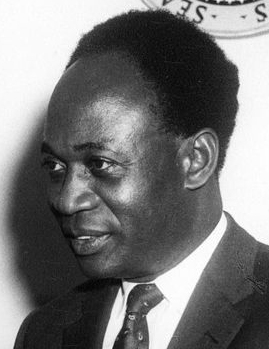
Kwame Nkrumah during a 1961 visit to the United States. Abbie Rowe/JFK Presidential Library · Public domain (U.S.).
Ghana · First president
Kwame Nkrumah
The vision
Political independence linked to African unity, economic self-reliance and continental institutions strong enough to resist renewed external control.
The record
Ghana's independence became a continental symbol and Nkrumah helped establish the OAU. Ambitious industrial and infrastructure programs sat beside growing centralization, restrictions on opposition and his removal in a 1966 coup.
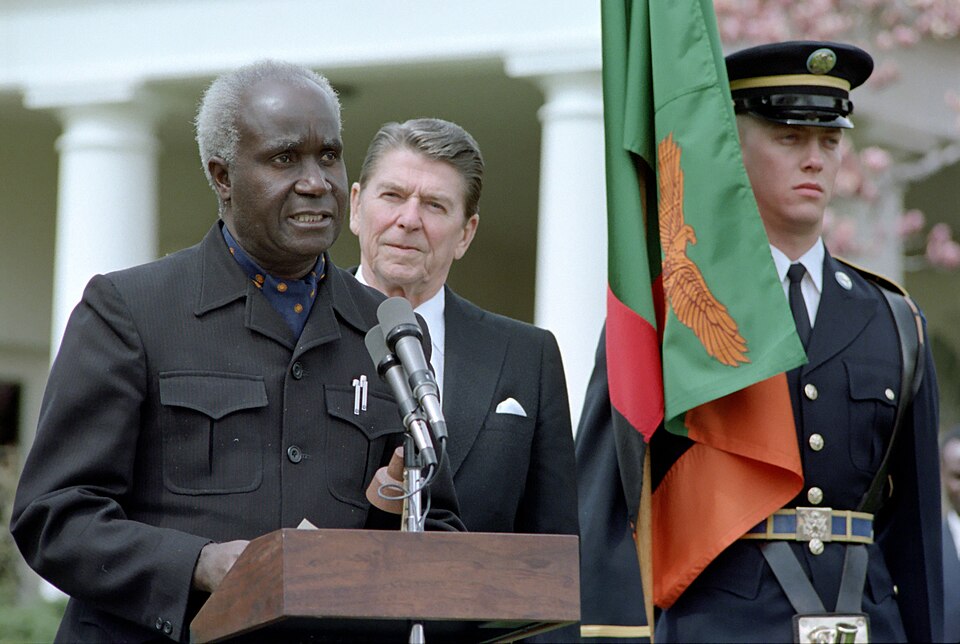
Kenneth Kaunda with Ronald Reagan during a White House visit, March 30, 1983. White House Photographic Office/National Archives · Public domain (U.S.).
Zambia · First president
Kenneth Kaunda
The vision
A multiracial nation guided by humanism, dignity and solidarity, with Zambia supporting liberation movements across Southern Africa.
The record
Kaunda helped hold together a diverse new state and made Zambia a base for regional liberation. Falling copper revenues, economic strain and one-party government complicated that legacy before multiparty elections in 1991.
Julius Nyerere during a 1977 meeting with U.S. President Jimmy Carter. Bill Fitz-Patrick/White House/National Archives · Public domain (U.S.).
Tanzania · Founding president
Julius Nyerere
The vision
Ujamaa joined social equality, national self-reliance, mass education and a distinctly African understanding of community and shared responsibility.
The record
Nyerere strengthened national identity, expanded education and supported liberation movements. Forced villagization, limits on political competition and disappointing economic outcomes remain central to assessments of his program.
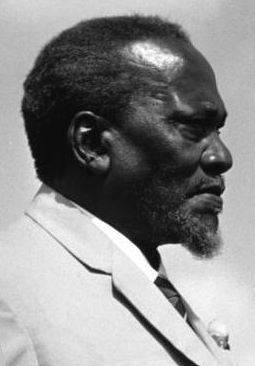
Jomo Kenyatta, 1966. Ludwig Wegmann/German Federal Archives · CC BY-SA 3.0 DE · Cropped to fit.
Kenya · First president
Jomo Kenyatta
The vision
National reconciliation, political stability and economic development after a violent colonial emergency and a long struggle for self-government.
The record
Kenya built functioning institutions and pursued growth, but unequal land settlement, concentrated political power and unresolved grievances limited the inclusiveness of the independence settlement.
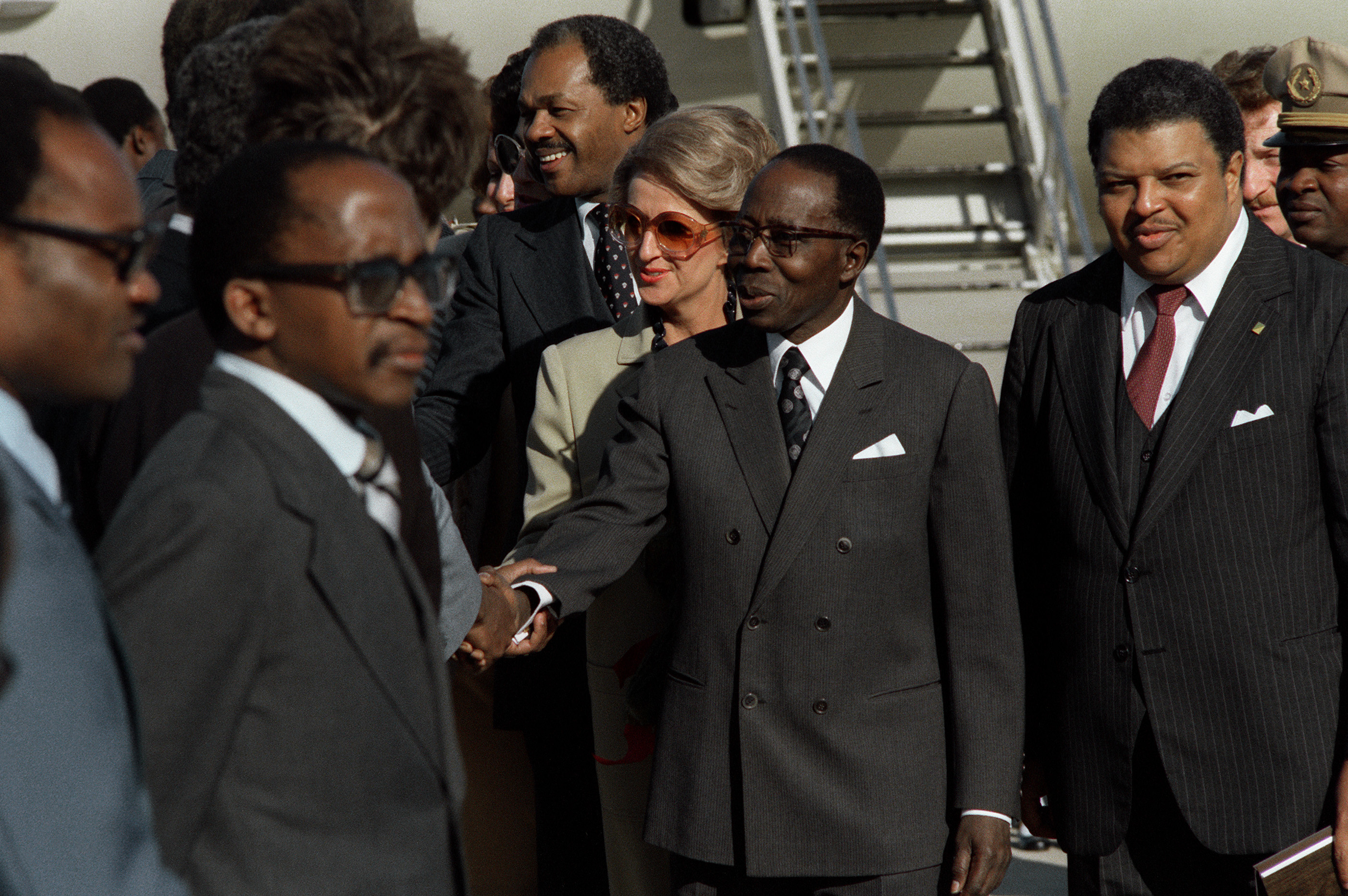
Léopold Sédar Senghor arriving in the United States, 1980. U.S. Department of Defense · Public domain (U.S.).
Senegal · First president
Léopold Sédar Senghor
The vision
A democratic African state shaped by culture, education, dialogue and Negritude - the affirmation of Black identity and contribution to world civilization.
The record
Senghor made cultural thought part of statecraft and eventually permitted broader party competition before voluntarily leaving office. His close relationship with France remains part of debate about post-colonial autonomy.
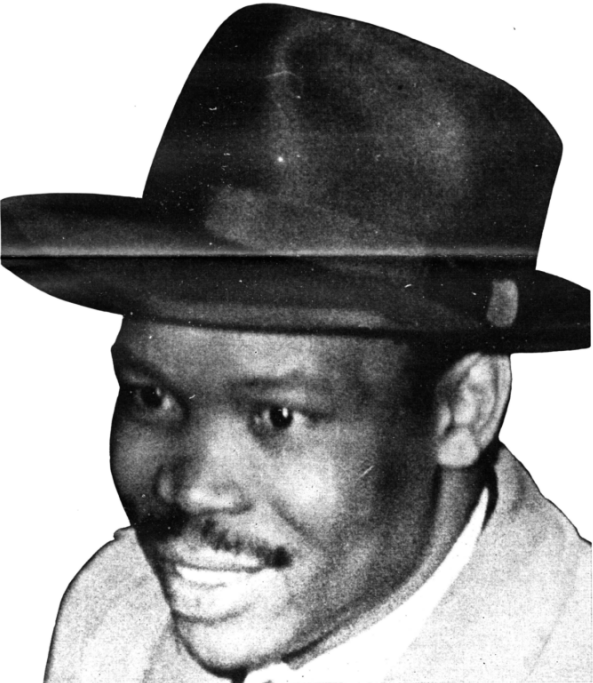
Seretse Khama, 1961. Photographer unknown · Public domain.
Botswana · Founding president
Seretse Khama
The vision
Consultative government, racial inclusion and disciplined development in a country that entered independence with extremely limited infrastructure.
The record
Botswana established a durable multiparty system and used mineral revenue to expand public services. Its progress was institutional rather than the work of one person, and later inequality tests the breadth of that development model.
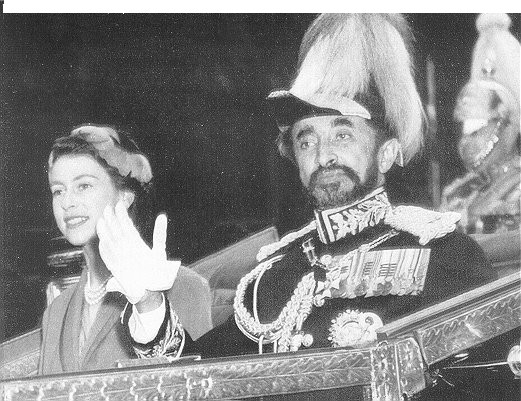
Haile Selassie with Queen Elizabeth II during his 1954 state visit to Britain. United Kingdom Government photograph · Public domain.
Ethiopia · Emperor and Pan-African statesman
Haile Selassie
The vision
An independent Ethiopia engaged with the wider world and a continent united through diplomacy, collective security and permanent African institutions.
The record
Haile Selassie became an international symbol of resistance after Italy's invasion, later hosted the 1963 founding of the Organization of African Unity in Addis Ababa and supported African cooperation. His centralized imperial rule, unequal land system, political repression and the government's response to famine remain essential parts of the record before his overthrow in 1974.
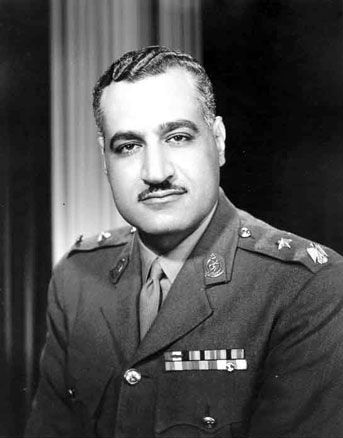
Official portrait of Gamal Abdel Nasser, 1964. Egyptian press photograph · Public domain.
Egypt · Republic-era president
Gamal Abdel Nasser
The vision
National sovereignty, Arab unity, industrial development and non-alignment, coupled with strong support for African liberation and resistance to colonial influence.
The record
The Suez crisis made Nasser an international symbol of anti-imperial independence. State-led modernization and social reform existed alongside authoritarian government, military defeat and restrictions on political freedoms.
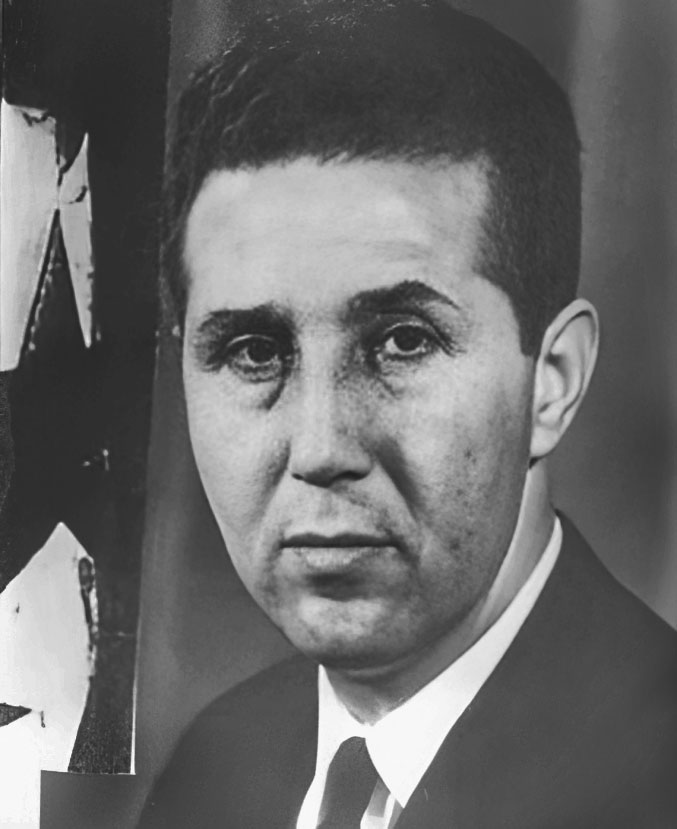
Official portrait of Ahmed Ben Bella, 1963. Republic of Algeria · Public domain.
Algeria · First president
Ahmed Ben Bella
The vision
A sovereign socialist Algeria emerging from a devastating liberation war, aligned with anti-colonial movements and wider African solidarity.
The record
Ben Bella connected Algeria's revolution to continental liberation and helped launch the OAU era. Political concentration, institutional conflict and his overthrow in 1965 narrowed the early experiment.
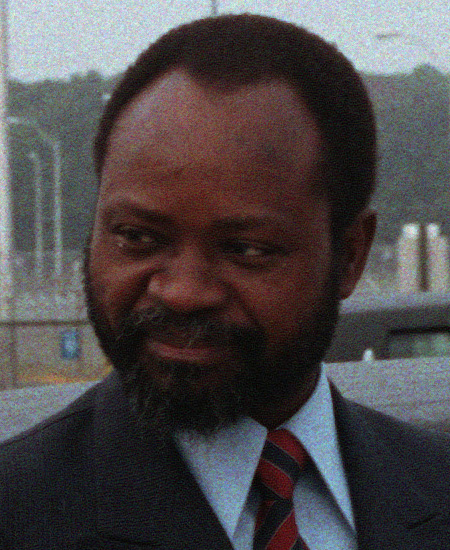
Samora Machel in the United States, 1985. SrA James Simpson/U.S. Department of Defense · Public domain (U.S.).
Mozambique · First president
Samora Machel
The vision
A united, independent Mozambique committed to ending colonial rule, reducing inequality and linking national liberation with education, public service and the emancipation of women.
The record
Machel proclaimed Mozambique's independence in 1975 and made the country an important supporter of liberation in Southern Africa. Efforts to expand literacy, health care and women's participation existed alongside one-party rule, coercive policies and a devastating regionalized civil war.
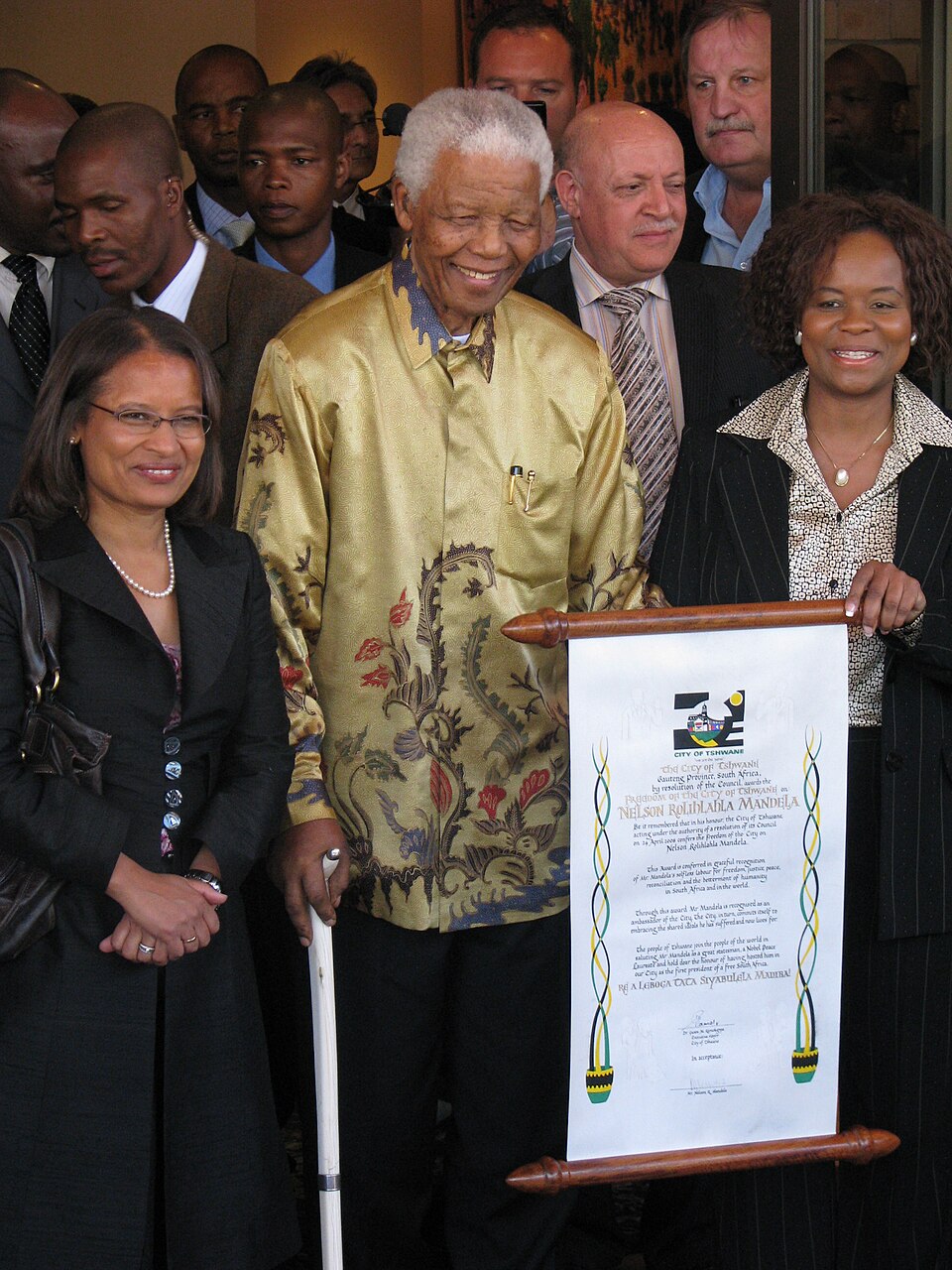
Nelson Mandela in Johannesburg, 2008. South Africa The Good News · CC BY 2.0 · Cropped to fit the profile layout.
South Africa · First democratic president
Nelson Mandela
The vision
A constitutional, nonracial and nonsexist democracy built on equal citizenship, human dignity, reconciliation and the peaceful transfer of political power.
The record
Mandela helped lead South Africa from apartheid to democratic government and gave reconciliation a central place in the new national project. That transition was a collective achievement, while persistent inequality and debate over the compromises of the negotiated settlement remain part of its unfinished record.
BEYOND THE PRESIDENCY
Independence was never one person's achievement.
Presidents became the public faces of new states, but liberation was built by organisers, trade unionists, journalists, teachers, soldiers, diplomats, community leaders and ordinary citizens. Women were essential to these movements while frequently being excluded from later political power.
Future profiles will examine these wider networks and the people whose work complicates the familiar “founding father” narrative.
Funmilayo Ransome-KutiNigeria · organizing, women's rights and anti-colonial politics
Josina MachelMozambique · Liberation and women's political participation
Bibi Titi MohamedTanzania · Mass organizing in the independence movement
Lilian NgoyiSouth Africa · Anti-apartheid and women's mobilization